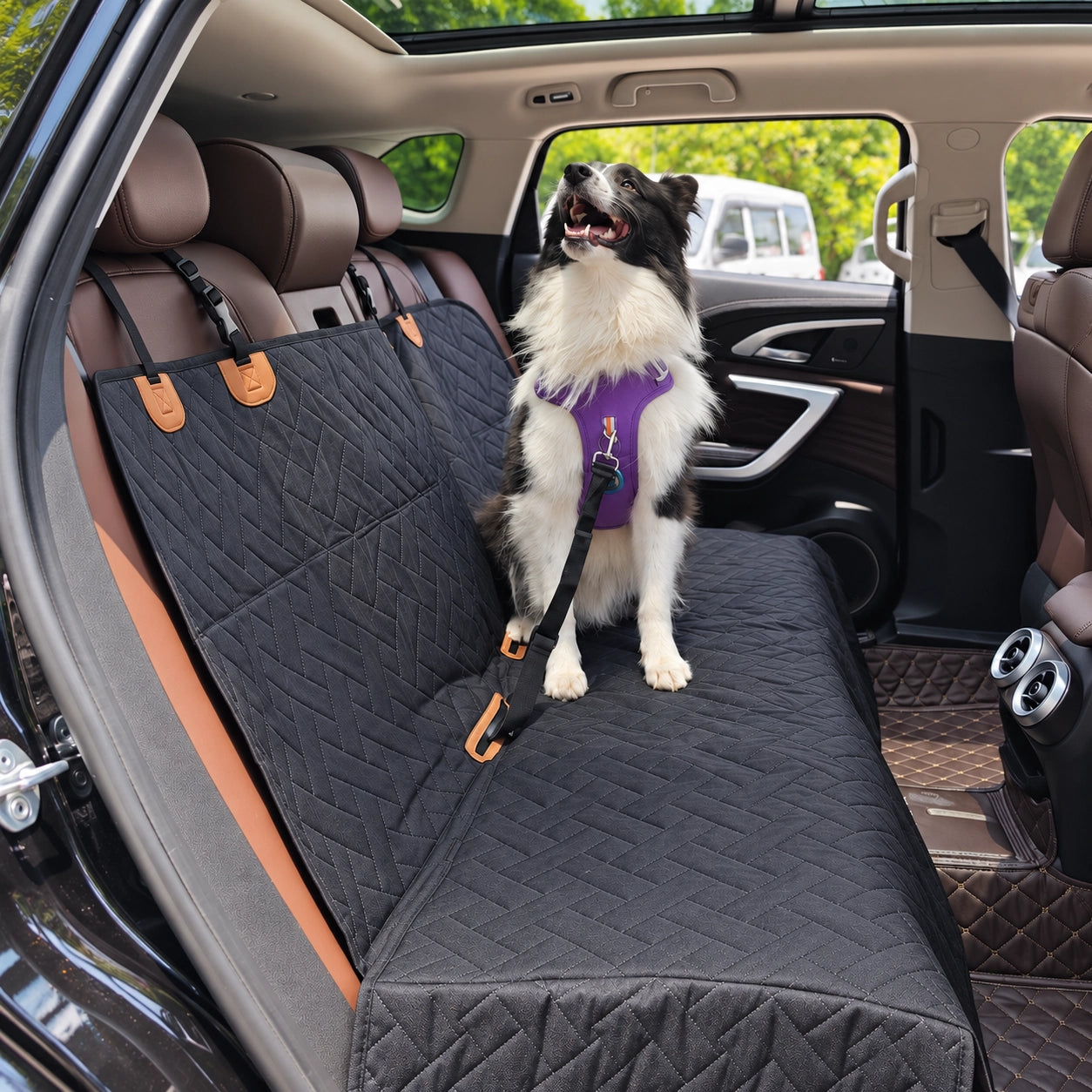
Dog Back Seat Cover for a Shared Seat: A Modular Layout Note
A dog back seat cover is often assumed to mean a full hammock that gives one dog the entire rear row. That is not always how real trips work. On school runs, airport pickups, or weekend drives, a dog may need part of the rear seat while another passenger still needs a usable place to sit. The relevant question becomes less about maximum coverage and more about how a cover’s layout manages shared space.

A shared seat is a different design problem
In a full-hammock setup, the cover may prioritize creating one continuous area for the dog. A shared-seat configuration has competing requirements: the dog’s area needs sensible coverage and a stable setup, while the passenger’s area needs a clear sitting space and access to the buckle they will use. A cover cannot decide that balance for you; it can only offer a layout that gives you options.
The SafiPet Reinforced Modular Hard Bottom Dog Car Seat Extender Cover is designed around that flexibility. Its adjustable construction can be configured for hammock, bench, cargo, and shared-seat use. Three removable support panels make it possible to adapt the setup rather than treating every drive as the same trip.
How the construction supports a modular choice
The product’s extended panels are designed to help protect seats, doors, and seat backs from pet hair, dirt, and everyday wear. Its water-resistant layers are intended for light spills, mud, and regular messes—not for complete waterproofing. A breathable mesh window faces the front cabin, while built-in pockets keep small essentials such as leashes, toys, and treats nearby.
These features matter differently in a shared arrangement. Removable panels can help you move between a larger dog area and a split layout; storage pockets can reduce loose items around the passenger space. The cover uses heavy-duty Oxford fabric and adjustable straps designed to secure it in a range of compatible cars, SUVs, and trucks. Exact compatibility still depends on the vehicle and must be confirmed against the product dimensions.
Decide the seat allocation before installation
Before fitting any modular pet car seat cover, map the trip rather than starting with the fabric:
- Dog’s position: Is the dog most comfortable on the bench, over the footwell, or in a separated rear-seat section?
- Passenger’s position: Which seat and buckle must remain available throughout the drive?
- Entry route: Will your dog enter from the passenger-side rear door, and do door-side panels need to be opened or closed around that routine?
- Change frequency: If the layout changes every week, prioritize a configuration you can recheck and reinstall carefully rather than leaving it partly adjusted.
Two limits worth keeping clear
First, a shared-seat layout is not a vehicle-specific custom fit. Measure the usable rear bench, note headrest positions, and confirm the buckle access you need before purchase. Second, a cover does not replace a vehicle-approved pet safety restraint. Use compatible restraints according to their manufacturers’ instructions; do not treat an opening in the cover as a restraint.
When the full rear row is the better answer
If your dog regularly stretches out, moves between the bench and footwell, or travels without a passenger, a fuller rear-seat configuration may make more sense than a split layout. For a practical overview of that decision, see A Toyota RAV4 Rear-Seat Setup with a Dog Back Seat Extender. The point is not to maximize fabric coverage; it is to create a repeatable, correctly installed travel routine that suits the occupants of that particular drive.